

What Makes Wireline Different
Conventional core drilling requires the entire drill string to be pulled from the hole each time the inner tube is full — a process that can take 30–90 minutes per run at depth. Wireline drilling uses a double-tube system: the inner tube (containing the core) is retrieved by a wire-mounted overshot tool lowered through the hollow outer drill string, without disturbing the borehole. This reduces core retrieval time to 5–15 minutes per run regardless of depth.
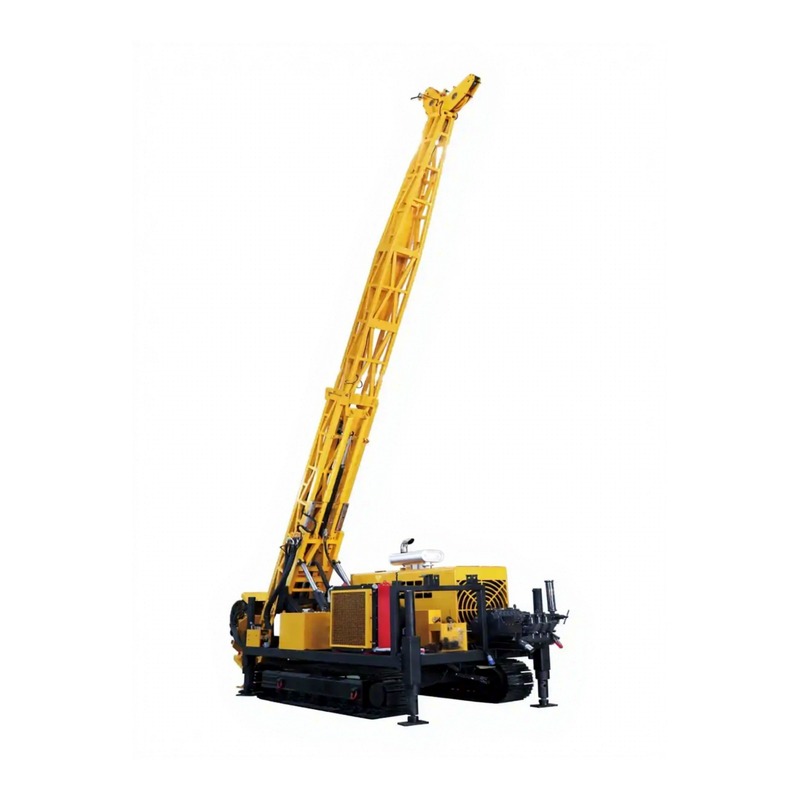
Figure 1 — Win Drill C2500 Full Hydraulic Core Drilling Rig. Rated for NQ wireline depths to 2,500 m with Cummins 264 kW power unit.
Rod Size Standards: NQ, HQ, PQ and Beyond
The international wireline rod system (DCDMA / ISO 10097) uses lettered designations that define both the outer diameter of the drill string and the resulting core diameter. Selecting the correct size requires balancing formation requirements, target depth, and laboratory sample volume needs.
| Rod Size | Outer Dia. (mm) | Core Dia. (mm) | Typical Max Depth | Best For |
|---|---|---|---|---|
| BQ | 55.6 | 36.5 | 800 m | Shallow exploration, soft rock |
| NQ | 69.9 | 47.6 | 1,500 m | General mineral exploration |
| HQ | 88.9 | 61.1 | 1,200 m | Large sample requirements, fractured rock |
| PQ | 122.6 | 85.0 | 800 m | Large-diameter geotechnical sampling |
| PQ3 | 122.6 | 83.0 | 600 m | Triple-tube, highly fractured formations |
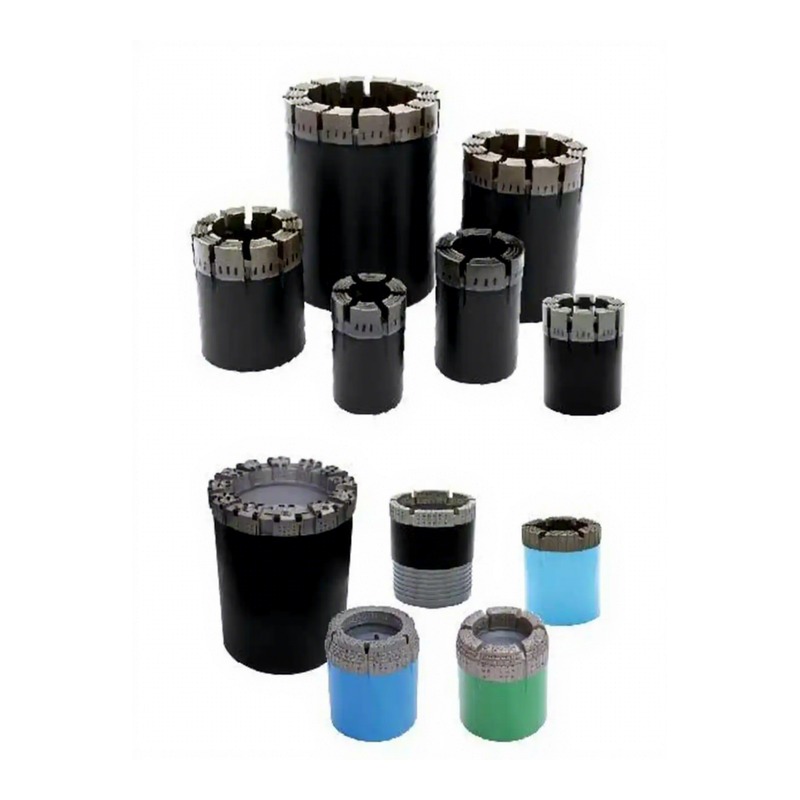
Impregnated diamond core bit — standard for hard-rock wireline drilling
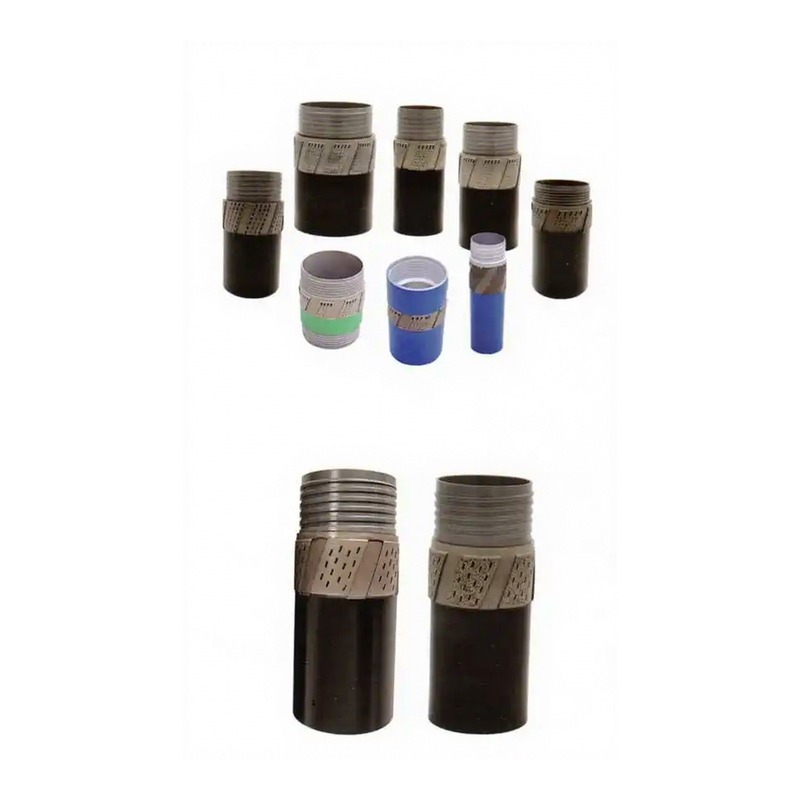
Diamond reaming shells — maintain gauge and protect the bit in abrasive formations
Core Recovery Optimization
Core recovery percentage (TCR) and Rock Quality Designation (RQD) are the primary quality metrics for any exploration program. Below 85% TCR, the geological log becomes unreliable. The three most common causes of poor recovery — and their solutions:
Problem 1: Washing Out Fractured Core
High flush velocity through the bit face erodes weak or fractured core before it enters the inner tube. Solution: switch to triple-tube core barrel (T3, T6 series) which provides a split inner liner for minimum disturbance retrieval. Reduce water flow rate and use polymer additives to increase mud viscosity.
Problem 2: Core Blocking (Jamming)
Core jams in the inner tube when the formation transitions from soft to hard, or when swelling clay minerals expand on contact with water. Solution: use a spring-loaded core catcher matched to the formation; switch to oil-based drilling fluid in smectite clay zones; limit run length to 1.5 m in problem intervals.
Problem 3: Bit Bounce and Deviation
Excessive WOB (Weight on Bit) in hard, massive formations causes bit bounce — rapid vertical oscillation that damages the inner tube head and causes borehole deviation. Solution: install a pendulum BHA assembly; reduce WOB to 5–8 kN and increase rotation speed; consider PDC core bits for massive quartzite formations.
"The difference between a 78% and a 96% core recovery on a 600 m exploration hole is not just data quality — at $180/m drilling cost, it is the difference between a conclusive resource estimate and another $108,000 infill hole."
— Senior Geologist, West African Gold Exploration ProgramRecommended Equipment for a 1,000 m NQ Exploration Program
Based on industry benchmarks for a 1,000 m NQ wireline program in medium-hard rock (UCS 80–140 MPa), the following equipment package is a practical starting point. Consult your drilling contractor and geologist to adjust for site-specific conditions.
| Item | Specification | Quantity | Notes |
|---|---|---|---|
| Core Drilling Rig | Win Drill C2000 / C2500 | 1 unit | 264 kW, full hydraulic, NQ/HQ capable |
| NQ Drill Rods | 3 m / rod | 340 rods | 1,020 m string + 20% standby |
| NQ Double-Tube Assembly | 1.5 m or 3 m barrel | 4 sets | 2 in use, 2 rotating |
| Overshot / Retriever | NQ standard | 2 units | 1 operational, 1 spare |
| Impregnated Diamond Bits | NQ 76 mm | 25–40 bits | Based on 25–40 m/bit in target formation |
| Reaming Shells | NQ gauge | 10 shells | Replace every 3–4 bit changes |
| Drilling Fluid System | Polymer + bentonite | As required | Target 8–12 cP Marsh funnel viscosity |
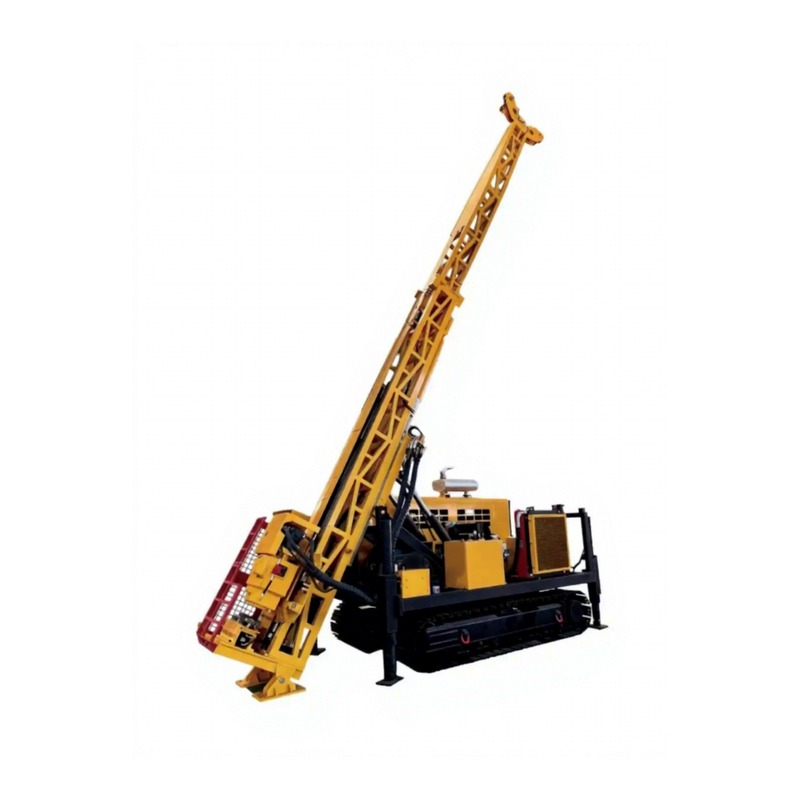
Figure 2 — Win Drill C1800 on a mineral exploration project. Mast height accommodates 3 m rod handling for efficient deep-hole operation.
Safety and Site Management Checklist
Core drilling at depth carries risks that must be actively managed: borehole instability, drill rod ejection under pressure, H₂S gas encounters in certain geological settings, and hydraulic fluid fire hazards. All Win Drill core rigs ship with our standard safety protection net — an automatic barrier that locks out the power head whenever the net is opened, preventing accidental contact with rotating drill string components.
1. Verify safety net interlock is functional before powering up. 2. Check hydraulic hose fittings and rod thread condition. 3. Confirm borehole collar casing is seated and grouted. 4. Test wireline sheave and spooling mechanism under no-load. 5. Review geological prognosis for the upcoming run — anticipate formation changes.
Planning a Wireline Core Drilling Program?
Our applications engineers can review your exploration target and recommend the optimal rod size, rig model, and core barrel configuration — at no charge.
Get a Free Program Review →