

1. What Is a DTH Drilling Rig — and When Do You Need One?
Down-The-Hole drilling places the percussion hammer directly behind the drill bit at the bottom of the borehole, transmitting impact energy with minimal loss through the drill string. This makes DTH the preferred method for hard-rock formations (UCS > 80 MPa), deep blast-hole drilling, and water well applications where formation integrity must be preserved.
Compared to rotary or top-hammer methods, DTH delivers a straighter borehole, higher penetration rate in hard rock, and significantly lower drill bit wear — at the cost of requiring a high-volume air supply from a dedicated compressor.
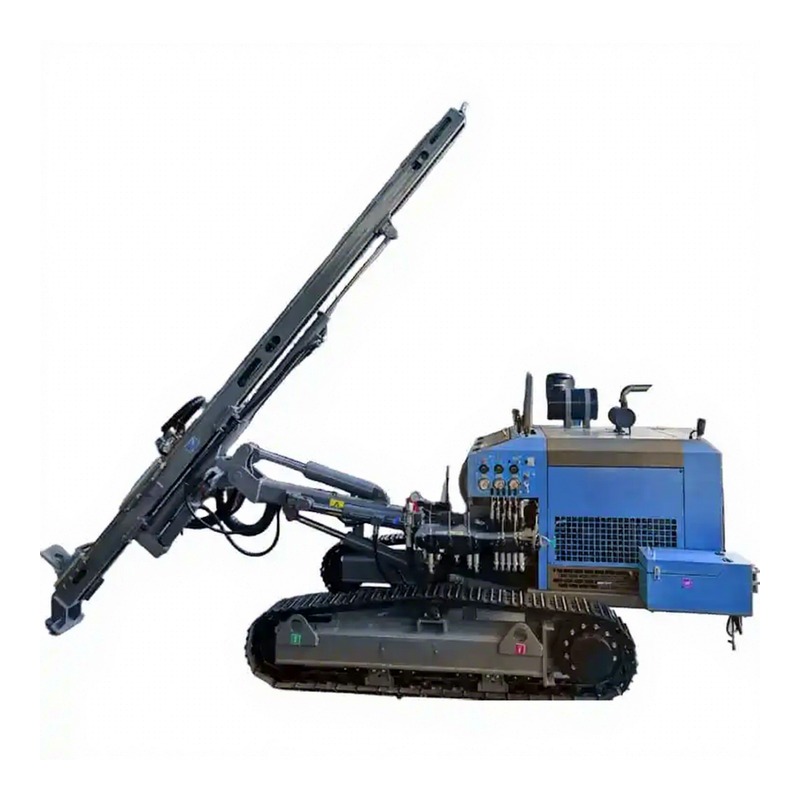
Figure 1 — Win Drill 617 Full Hydraulic DTH Drilling Rig, rated for depths up to 500 m in hard-rock formations.
2. The 5 Parameters That Define the Right Machine
2.1 Target Depth and Hole Diameter
These two numbers determine drill pipe weight, mast height, pull-back force, and required air volume. As a rule of thumb: every 100 m of additional depth demands roughly 15–20% more hydraulic torque capacity from the rotary head.
| Application | Typical Depth | Hole Diameter | Recommended Series |
|---|---|---|---|
| Water Well (residential) | 50–200 m | 150–250 mm | Win Drill 617 / 618 |
| Water Well (municipal) | 200–500 m | 250–400 mm | Win Drill 720 / 790 |
| Quarry Blast Hole | 10–30 m | 90–165 mm | Win Drill 650 / FL516 |
| Geothermal | 300–800 m | 200–350 mm | Win Drill 843 / 847 |
| Foundation Anchoring | 20–80 m | 100–200 mm | Win Drill 710 |
2.2 Rock Hardness (UCS)
Unconfined Compressive Strength (UCS) directly determines hammer size and working pressure. For formations above 200 MPa (e.g., dense granite or quartzite), specify a high-pressure DTH system operating at 24–35 bar. Standard systems at 10–17 bar are adequate for limestone, sandstone, and moderately hard formations.
"We lost three weeks on a geothermal project in Kenya because the original rig spec called for 17-bar operation in formation that turned out to be 240 MPa quartzite. Always drill test cores before finalizing your rig spec."
— Project Manager, East Africa Geothermal Development Consortium2.3 Air Compressor Capacity
The compressor is the engine of a DTH system. Insufficient air flow is the single most common cause of DTH underperformance in the field. Calculate required volume as: Q (m³/min) = Annular velocity (15–25 m/s) × Annular cross-section area. Add 20% safety margin for altitude and temperature.
At altitudes above 2,000 m (common in Andean, East African Rift, and Tibetan plateau projects), compressor output drops by approximately 3% per 300 m of elevation. Always de-rate your compressor capacity accordingly when specifying a system for high-altitude sites.
2.4 Mobility and Site Access
Crawler-mounted rigs offer self-propelled mobility over rough terrain with zero setup time for leveling. Truck-mounted systems provide faster road travel but require level ground. Skid-mounted units are lowest cost but require crane or forklift for repositioning between holes.
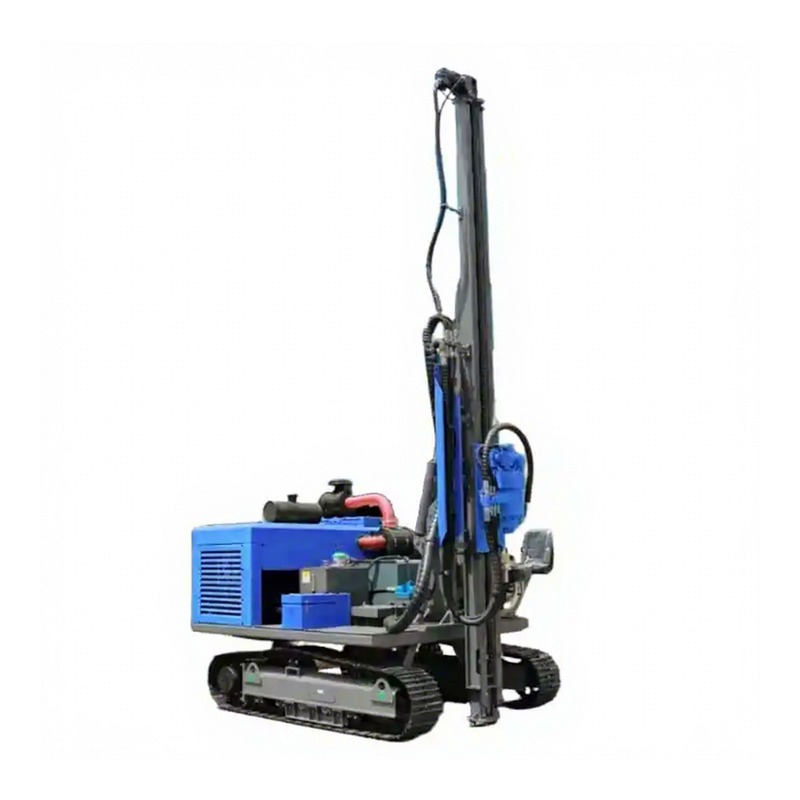
720 Series — crawler-mounted, ideal for remote terrain
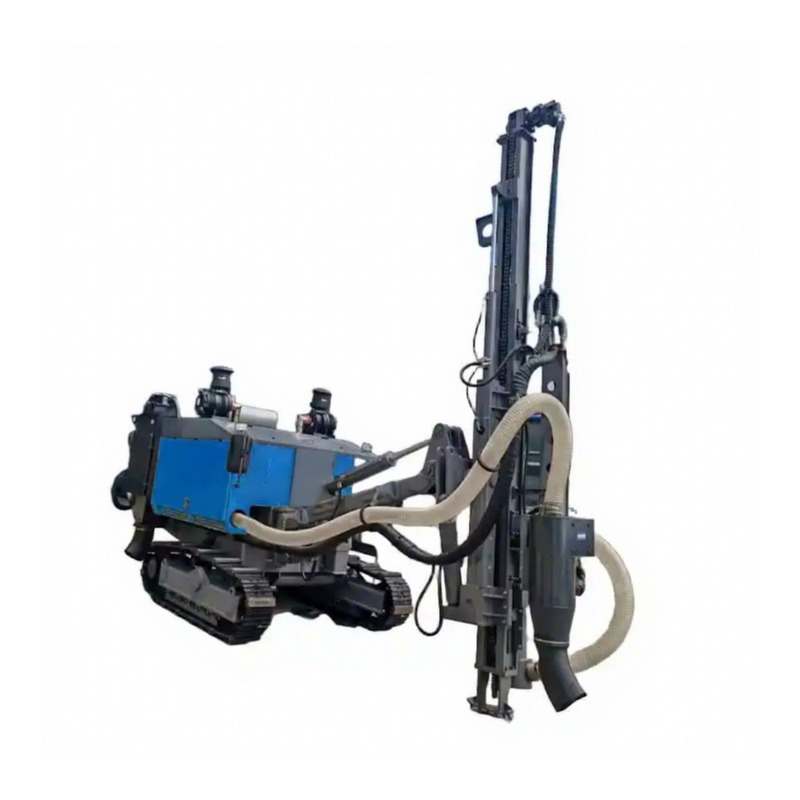
843 Series — heavy-duty, deep-hole geothermal & mining
2.5 Power Source and Drive System
Full hydraulic drive (all-hydraulic rotary head, hydraulic feed, hydraulic leveling) is the current industry standard for rigs above 200 m depth. It provides precise torque control, reversibility under stuck-pipe conditions, and compatibility with modern remote monitoring systems. Mechanical drive rigs remain viable for shallow, single-formation operations where simplicity and low parts cost are priorities.
3. Total Cost of Ownership: Beyond the Purchase Price
A DTH rig with a 15% lower sticker price but twice the drill bit consumption per meter will cost significantly more over a 3-year operating cycle. Key TCO factors include: hammer rebuild interval (target: 500+ hours between overhauls), bit life per formation type, spare parts availability in your region, and dealer service network density.
| TCO Factor | Questions to Ask the Supplier |
|---|---|
| Hammer Rebuild Interval | What is the rated MTBF? Are rebuild kits locally available? |
| Drill Bit Life | Expected meters per bit in granite at 180 MPa UCS? |
| Hydraulic Fluid Spec | ISO VG 46 or 68? What is the change interval? |
| Warranty Coverage | Parts only, or labor and transportation included? |
| Training Support | On-site commissioning and operator training included? |
Need Help Specifying the Right Rig?
Send us your project depth, formation type, and hole diameter — our engineering team will prepare a tailored recommendation within 24 hours.
Request a Technical Consultation →